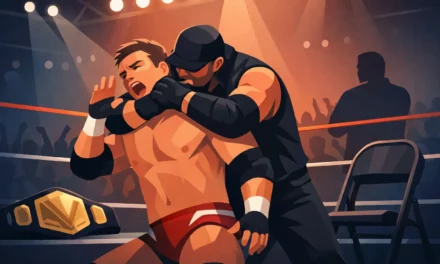
One week a wrestler is shaking hands and playing to the crowd. Two weeks later, he smashes his tag partner with a chair and walks out grinning like he planned it all month. If you have ever wondered how wrestling storylines work, that shift is the whole point. Pro wrestling is built on controlled chaos – athletic matches wrapped around character arcs, rivalries, betrayals, and payoff moments designed to keep fans coming back.
How wrestling storylines work in simple terms
At the most basic level, a wrestling storyline is an ongoing fictional conflict told through matches, promos, backstage segments, surprise returns, alliances, and betrayals. Think of it like a sports rivalry mixed with a TV drama. The difference is that the match is not just the ending. It is also part of the storytelling language.
A great feud does not start and end with one promo. It builds. A champion disrespects a challenger. A friend turns on a friend. A dominant star starts doubting himself after a loss. Each week adds a new piece. The goal is to make the audience care enough that the next match feels bigger than the last one.
That is why wrestling can feel so different from regular sports coverage. In basketball or football, the drama comes from real competition. In wrestling, the promotion creates the framework for the drama, then the performers sell it with timing, charisma, physicality, and crowd connection.
The basic parts of a wrestling feud
Most wrestling angles are built from a few familiar ingredients. First, you need characters. Wrestling rarely works when everybody is just a good athlete with no clear identity. Fans need to know who someone is, what they want, and why they act the way they do.
Second, you need conflict. That can be a title shot, jealousy, disrespect, revenge, faction warfare, or even a simple question of who the better wrestler is. The strongest storylines usually attach that conflict to something personal. A championship matters, but a stolen spotlight or a brutal betrayal often matters more.
Third, you need escalation. If two wrestlers argue in week one, they cannot have the same argument in week four and expect fans to stay invested. The stakes have to rise. Maybe one costs the other a match. Maybe a friend picks sides. Maybe the feud spreads to a tag match before finally reaching a singles bout on a major show.
Finally, you need a payoff. That does not always mean the story fully ends. Wrestling loves rematches, swerves, and unfinished business. Still, fans need some sense that their investment led somewhere meaningful. A great payoff can be a title change, a brutal stipulation match, or even a shocking betrayal that launches the next chapter.
Faces, heels, and why alignment still matters
Wrestling storytelling has evolved, but one old rule still does a lot of heavy lifting. Fans generally need to know who they are supposed to cheer and who they are supposed to boo. The babyface is the hero. The heel is the villain. That part is simple.
The tricky part is making those roles feel fresh. Modern audiences are smarter, louder, and more willing to cheer a villain if that villain is more entertaining. Some of the best heels are funny. Some of the best babyfaces are flawed. Promotions know this, which is why alignments are often more flexible than they used to be.
Still, the emotional engine stays the same. Wrestling needs tension. A heel cuts corners, insults the crowd, or hides behind a faction. A babyface fights uphill and earns support. When that formula clicks, even a straightforward match can feel massive because the audience is emotionally choosing a side.
Promos are where the story often lives
A lot of fans talk about match quality first, but promos are often where a feud actually becomes real. A great promo gives context to the match. It tells the audience why the fight matters now, not just on paper.
Some wrestlers do this with intensity. Others do it with humor, arrogance, or cold menace. Either way, a promo can turn a decent rivalry into a hot one overnight. One line can define a feud. One stare-down can sell a main event better than ten highlight packages.
This is also why some talented wrestlers struggle despite strong in-ring work. If they cannot communicate stakes, motivation, or personality, the story feels flat. On the other hand, a magnetic talker can keep a feud alive even when the booking gets messy.
Booking is the hidden structure behind everything
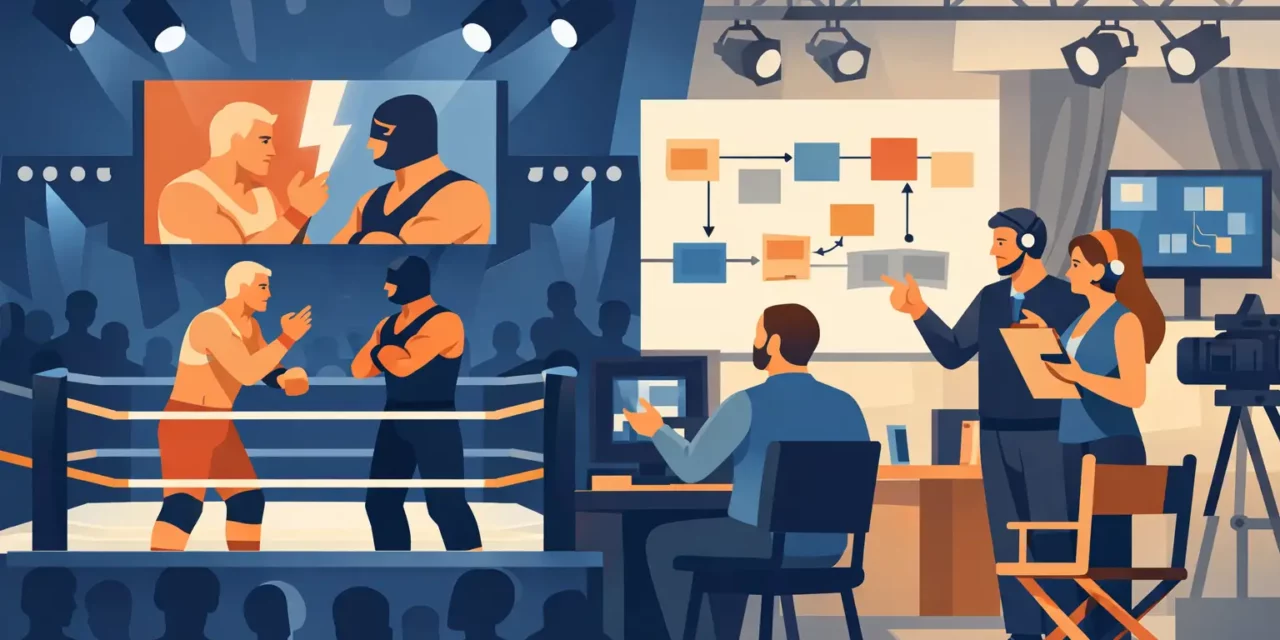
If promos are the visible fire, booking is the wiring in the walls. Booking is the process of deciding who wrestles whom, who wins, how characters change, and how short-term angles connect to bigger plans. It is the invisible architecture of the show.
Good booking balances patience with momentum. A promotion might want to build a star over six months, but if the crowd catches fire for someone else in week three, plans may change. That tension is a huge part of wrestling. Long-term storytelling sounds great until injuries, contract issues, crowd rejection, or creative misfires force a pivot.
This is why some storylines feel brilliantly layered and others feel like they are being rewritten on the fly. Sometimes that is exactly what is happening. Wrestling is live entertainment, and the audience is part of the equation in a way that most scripted TV is not.
How long-term storytelling actually works
Fans love the phrase long-term storytelling, and for good reason. When done well, it rewards attention. A look from six months ago suddenly matters. A betrayal pays off an old slight. A wrestler who kept losing finally changes his style, attitude, or allies and becomes believable as a top star.
But long-term storytelling is not just about making something last a long time. Dragging a feud out is not the same as building it well. Real long-term booking means planting details early, revisiting them at the right moments, and giving character choices continuity.
The best example is usually character evolution. A cocky champion gets exposed and becomes paranoid. A beloved underdog grows more ruthless after repeated failures. A tag team slowly breaks apart through miscommunication before the final split. Fans respond when the story feels earned rather than randomly assigned.
Crowd reaction can change the script
One of the coolest things about wrestling is that fans are not passive. They help shape what works. If a heel gets cheered too much, the character may shift. If a planned hero gets rejected, the promotion may have to change direction fast. If a feud catches on unexpectedly, it can jump from midcard filler to featured attraction.
That is part of what makes wrestling storylines feel alive. The company presents the story, but the crowd votes on it every week. Chants, silence, boos, social media buzz, and live reactions all matter.
This also explains why the same storyline can succeed in one era and fail in another. Wrestling fans today are extremely aware of tropes. They know when they are being pushed toward a reaction. If the writing feels forced, they will let the promotion know immediately.
Why some storylines work and others fall apart
Usually, the difference comes down to clarity and commitment. The audience needs to understand what the feud is about, why it matters, and what each wrestler wants. If motivation changes every week, fans stop caring.
Commitment matters too. A promotion cannot ask viewers to invest in a rivalry and then forget about it for two episodes. Consistency is what turns segments into a real story. Even wild gimmicks can work if the company commits to the logic of its own world.
Then there is the hardest part: payoff. Wrestling fans will forgive a slow start if the ending delivers. They will not forgive months of hype that leads to a flat finish, a random interference, or a feud that simply vanishes because creative moved on.
The secret is emotional stakes, not just match stakes
Titles matter. Rankings matter when a promotion uses them. Stipulations matter. But the reason fans remember the biggest wrestling storylines is usually emotional, not technical. They remember the betrayal, the comeback, the jealousy, the obsession, the humiliation, or the revenge.
That is the real answer to how wrestling storylines work. They turn matches into chapters and wrestlers into characters you either ride with or root against. The athletic side brings credibility. The story gives it weight.
When wrestling is firing on all cylinders, it feels like sports drama with a live crowd acting as a soundtrack and a jury at the same time. That is why fans can spend all week debating one promo, one turn, or one finish. The best storylines do more than fill TV time. They create a reason to care before the bell rings, and that is always the part worth chasing.