Popularity in fighting is never just about who draws the loudest crowd on Saturday night. It is also about TV reach, participation numbers, cultural history, Olympic exposure, social media buzz, and whether casual fans know the stars. That is what makes ranking combat sports by popularity so interesting – and a little messy.
If you ask ten fight fans for the biggest combat sports in the world, you will get overlap at the top and chaos in the middle. Boxing and MMA dominate most modern conversations, but wrestling, judo, kickboxing, Muay Thai, and Brazilian jiu-jitsu all have real claims depending on what kind of popularity you mean. So instead of pretending there is one perfect list, it makes more sense to rank them by overall global footprint while being honest about the gray areas.
Combat sports by popularity: the current pecking order
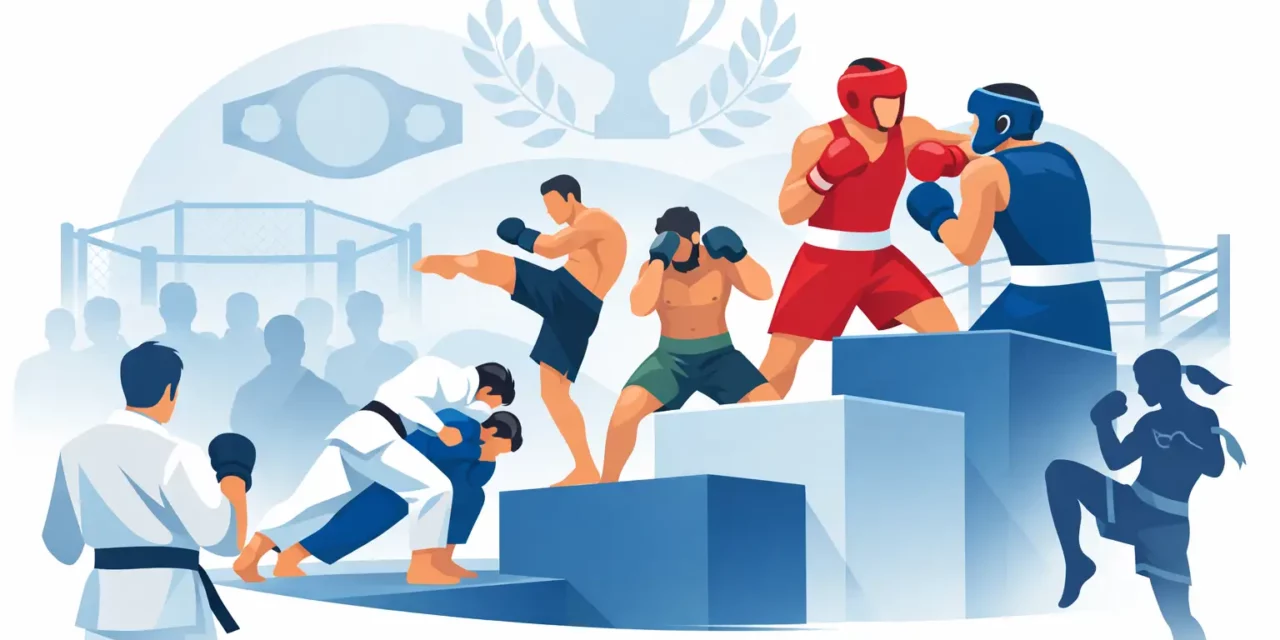
At the broadest level, boxing sits at or near the top globally, with MMA right there in terms of modern media heat. Wrestling belongs in the upper tier because of Olympic relevance, youth participation, and deep national traditions in places like the United States, Russia, Iran, Japan, and India. Judo remains massive internationally thanks to Olympic status and strong federation structure. Then you get a competitive middle where kickboxing, Muay Thai, Brazilian jiu-jitsu, and karate all have strong communities but different limits.
A reasonable current ranking looks like this: boxing, MMA, wrestling, judo, kickboxing, karate, Muay Thai, and Brazilian jiu-jitsu. That order can shift depending on whether you care most about viewership, active participants, or name recognition in the US.
Why boxing still leads many combat sports by popularity lists
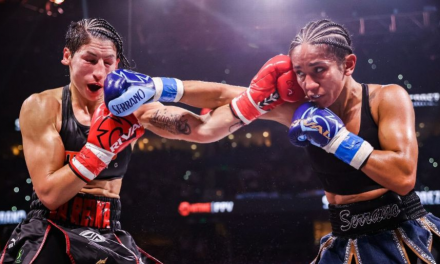
Boxing has two things no other combat sport can fully match at the same time: history and mainstream recognition. Even people who never watch a full fight know names like Muhammad Ali, Mike Tyson, Floyd Mayweather, Manny Pacquiao, and Canelo Alvarez. That kind of crossover matters.
The sport also travels well. Boxing is huge in the United States, Mexico, the United Kingdom, Japan, and throughout parts of Latin America and Eastern Europe. It has Olympic visibility, a long pro tradition, and a built-in rhythm that fans understand quickly. Two fighters, a ring, and very little confusion about what is happening.
Its weakness is fragmentation. Titles are split across sanctioning bodies, and casual fans often have no idea who the real champion is. Still, when a major fight breaks through, boxing can feel bigger than anything in combat sports.
MMA is the modern growth machine
If this were a ranking of momentum rather than total history, MMA would have a strong case for No. 1. The UFC turned mixed martial arts into a mainstream sports entertainment product with clear stars, easy branding, and year-round relevance. That matters in a media environment built on clips, personalities, and constant debate.
MMA also benefits from being the most complete spectator package for newer fans. You get striking, grappling, knockouts, submissions, controversy, and a clear sense that almost anything can happen. For a younger audience, that is a powerful formula.
The trade-off is scale. MMA is globally popular, but in many countries it still does not have the same grassroots depth as boxing, wrestling, or judo. Its elite product is huge. Its participation base, while growing, is not always as embedded in schools, clubs, and national systems.
Wrestling is bigger than casual fans think
For US readers, wrestling can be underrated because folkstyle is highly visible domestically while freestyle and Greco-Roman often get attention only around the Olympics. Globally, though, wrestling is one of the foundational combat sports. It has ancient roots, broad international participation, and a serious pipeline through youth and amateur systems.
In countries where wrestling is part of sporting identity, it is not some niche side dish. It is central. That gives it durability that trendier formats sometimes lack.
Its challenge is commercial profile. Wrestling produces incredible athletes, but outside Olympic cycles it does not always command the same casual audience as boxing or UFC-level MMA. Popularity among practitioners and popularity as a broadcast product are not always the same thing.
Judo has quiet global muscle
Judo rarely wins the loudest online arguments, but it is one of the most established combat sports on the planet. Olympic status gives it legitimacy, and national federations across Europe, Asia, and Latin America keep participation numbers strong. In many places, judo is a standard entry point into martial arts for kids.
That institutional strength matters. A sport does not need viral trash talk to be popular if thousands of clubs are consistently producing athletes and introducing new participants every year.
Where judo lags is mainstream pro visibility. Outside major international events, it does not have the same commercial spotlight in the US as boxing or MMA. But globally, its footprint is hard to ignore.
The crowded middle: kickboxing, karate, Muay Thai, and BJJ
This is where rankings get subjective fast.
Kickboxing has broad recognition and a style casual fans understand instantly. It has had major success in Japan, the Netherlands, and other markets, and it translates well on screen. The issue is branding. Kickboxing has often lacked one dominant global promotion with sustained mainstream power.
Karate probably has higher name recognition than some sports ranked above it, especially among general audiences. Plenty of people have heard of karate. Fewer actively watch it as a sport. That split between cultural familiarity and spectator relevance is why it is tough to place.
Muay Thai has become one of the most respected striking arts in the world, and its profile keeps rising thanks to crossover interest from MMA fans. It has authentic roots, clear stylistic identity, and a growing international audience. Still, outside Thailand and hardcore fight circles, it remains more admired than fully mainstream.
Brazilian jiu-jitsu is in a similar spot. Its influence is enormous because it shaped modern MMA and built a huge global training culture. But BJJ is much bigger in gyms than in mainstream spectator conversation. A lot of people train it. Far fewer tune in for full competition cards unless they are already in the scene.
US popularity versus global popularity
This is the part that changes the list for a lot of readers. In the United States, MMA might feel bigger than boxing on a week-to-week basis because the UFC has better promotional consistency and stronger digital presence. Wrestling is strong at the scholastic and college level, but pro fight visibility is lower unless an athlete crosses into MMA.
Globally, the picture widens. Boxing still carries massive weight. Judo and wrestling jump because participation systems are stronger. Muay Thai matters more once you account for Southeast Asia and international striking communities.
That is why any clean ranking needs context. A sport can be wildly popular to practice, modest to watch, or famous by name without drawing huge live audiences. All three matter, but they are not interchangeable.
What actually drives combat sports popularity
Star power is the obvious factor, but it is not the only one. A combat sport grows when fans can follow it easily, when newcomers can understand the rules, and when there is a visible path from local gym to big stage. Boxing and MMA thrive because their stars can become events. Wrestling and judo thrive because their systems keep feeding the sport.
Media matters too. A sport that produces highlight-reel finishes and strong personalities usually travels better online. That gives MMA an advantage in the current era. But tradition still counts. Some sports stay relevant for generations because they are woven into schools, national pride, or Olympic culture.
There is also the question of accessibility. If kids can easily find a gym, if parents trust the environment, and if local competitions are available, participation rises. That kind of steady grassroots health does not always trend on social media, but it is often the real engine behind long-term popularity.
So what is the most popular combat sport?
If you want the safest answer, it is boxing on a global historical scale and MMA on a modern buzz scale. That is not fence-sitting. It is just the truth of where combat sports stand right now.
Boxing still has unmatched legacy and worldwide recognition. MMA has the hottest current platform, the strongest year-round promotional machine, and arguably the best grip on younger digital audiences. Wrestling and judo remain giants once you look beyond headline culture. The rest of the field is not small – it is just more segmented.
For fans, that is actually the fun part. Popularity tells you where the spotlight is, but it does not tell you which sport you will love most. Sometimes the best combat sport to follow is not the one with the biggest audience. It is the one that makes you care enough to keep watching after the main event ends.