
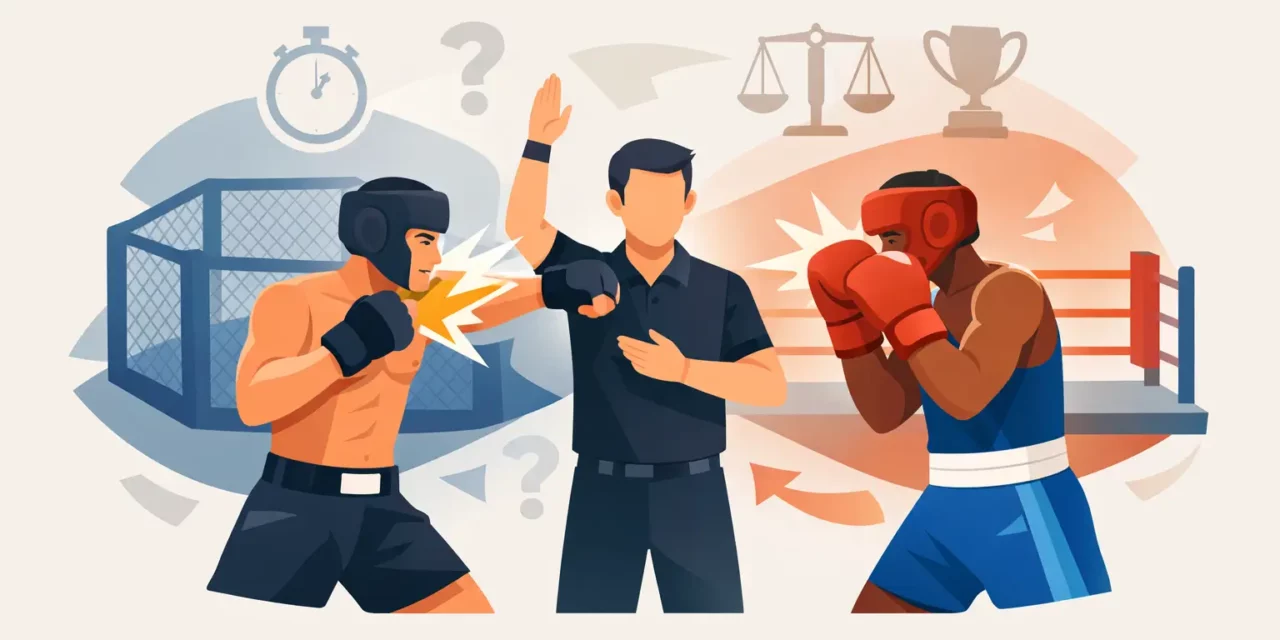
Ask ten fans for a combat sports example and you’ll probably get ten different answers, starting with boxing and ending somewhere between Olympic wrestling and bare-knuckle chaos. That’s part of the fun and part of the confusion. “Combat sports” sounds simple, but once you get past the obvious names, the category gets messy fast.
For fans, that matters because the label shapes expectations. A UFC card, a Golden Gloves tournament, a collegiate wrestling dual, and a judo match all involve direct physical competition, but they don’t reward the same skills, use the same scoring, or carry the same culture. If you’re trying to understand the space, the best move isn’t hunting for one perfect definition. It’s learning what makes one combat sports example fit the category and why another sits just outside it.
What makes a combat sports example?
At the simplest level, a combat sport is a regulated competition where two athletes try to defeat, control, strike, throw, submit, or outscore each other through direct physical engagement. That sounds broad because it is. The key words are regulated and competition.
A street fight is physical combat, but it is not a combat sport. A choreographed pro wrestling match has combat aesthetics and real athleticism, but the competitive result is predetermined, so it doesn’t usually sit in the same bucket as boxing or judo. A fencing bout, meanwhile, counts in many conversations because it is a direct, rules-based one-on-one contest rooted in combat technique, even if fans don’t always think of it first.
So if you’re looking for a clean test, start here. A valid combat sports example usually has an agreed rule set, officiating, scoring or finish conditions, weight classes or divisions in many cases, and a clear winner based on actual competition. Once those boxes are checked, the sport probably belongs in the conversation.
The clearest combat sports examples
If someone asks for a combat sports example and you want the least controversial answer possible, boxing is the easy pick. Two fighters, one ring, striking only with the fists, rounds, judges, knockouts, and a deeply established amateur and pro structure. It’s the blueprint a lot of casual fans picture first.
MMA is another obvious example, though it represents the modern, blended version of the category. It combines striking, clinch work, takedowns, and submissions under one rule set. That wider skill range makes it one of the most complete combat sports to watch, but also one of the most misunderstood by newer fans who assume it’s just less organized fighting. It’s actually extremely structured, just with more legal tools.
Wrestling belongs here too, especially folkstyle, freestyle, and Greco-Roman. Some fans hear “combat sport” and think only of punching and kicking, but grappling-based competition is central to the category. Wrestling is about control, leverage, balance, pressure, and positional dominance. There may be no strikes, but it is absolutely combat.
Judo and Brazilian jiu-jitsu fit for similar reasons. Judo emphasizes throws, trips, grips, and pins, with submissions also playing a role depending on the format. BJJ focuses more heavily on ground control and submissions. Both are direct, tactical, physically demanding contests with clear competitive structures.
Kickboxing, Muay Thai, karate, taekwondo, and sambo also qualify, though the exact format matters. Muay Thai in particular stands out because it allows punches, kicks, knees, elbows, and clinch fighting in ways that make it look brutally simple and technically deep at the same time.
Why some sports are obvious and others spark debate
This is where the category gets interesting. Everyone agrees on boxing. After that, arguments start.
Take fencing. It is absolutely a combat sport by many formal definitions. It’s one-on-one, rules-based, rooted in martial technique, and decided by direct engagement. But in US fan culture, especially among mainstream sports audiences, it often gets mentally filed under Olympic sport before combat sport. That doesn’t make it wrong. It just shows how labels are shaped by culture as much as logic.
Then there’s sumo. Sumo is a combat sport, no question, but it often gets discussed as a tradition-rich national spectacle before it gets discussed as a combat discipline. The objective is different from boxing or MMA, and the pace can be radically different, yet it still checks the core boxes.
Now look at pro wrestling. This is where fandom complicates the definition in the best way. Pro wrestling uses combat storytelling, grappling language, match structures, and athlete skill sets that overlap with real combat sports. Plenty of wrestlers have amateur, boxing, judo, or MMA backgrounds. But because match outcomes are scripted, it doesn’t count as a combat sport in the strict competitive sense. It lives beside the category, not fully inside it.
That distinction matters if you cover sports culture for actual fans instead of just sorting terms in a dictionary. The overlap is real, but so is the difference.
Combat sports example by style
One useful way to make sense of the space is to split it by how athletes win.
Striking sports include boxing, kickboxing, Muay Thai, karate, and taekwondo. These are built around punches, kicks, knees, elbows, or some combination of them, depending on the rules. The visual drama is immediate, which is part of why striking sports tend to draw broad audiences.
Grappling sports include wrestling, judo, BJJ, and sambo. Here, the goal is control, takedowns, throws, positional advantage, pins, or submissions. To some casual viewers, these sports can look slower at first. To invested fans, they’re full of momentum swings and split-second technical battles.
Hybrid sports are led by MMA, where striking and grappling coexist. That mix makes it easier for one athlete’s strength to cancel out another’s. A great striker can be neutralized by takedowns. A strong grappler can be punished on the feet. That trade-off is what keeps the sport so compelling.
Weapon-based combat sports, like fencing or kendo in certain contexts, sit in their own lane. They still involve direct combat under rules, but they don’t fit the image most American fans have when they hear the phrase.
Why the rules matter more than the violence
A lot of casual coverage treats combat sports as a measure of how brutal something looks. That’s a mistake. Violence is part of the package, but rules are what define the sport.
Boxing limits weapons to the fists. Wrestling removes striking altogether. Judo rewards clean throws in ways that can end a match instantly. Muay Thai allows attacks that would be illegal elsewhere. In BJJ, an athlete can dominate without landing a single strike. Same broad category, completely different logic.
That’s why a combat sports example should never be explained with just “they fight each other.” Two athletes can fight under totally different systems and be playing very different games. The sport is not just the contact. It’s the structure around the contact.
For fans, that’s also where appreciation grows. Once you know the rules, the action stops looking random. A clinch becomes a chess position. A jab becomes a setup instead of a punch thrown to fill space. A stalled-looking scramble on the mat becomes a race for leverage and control.
The best example depends on who’s asking
If you’re explaining the term to a total beginner, boxing is probably the best combat sports example because everybody recognizes it right away. If you’re talking to a younger fan raised on highlight clips and cross-discipline stars, MMA may be the more natural answer. If you want to stress that combat sports are not just about striking, wrestling or judo might actually be the smartest example.
That “it depends” answer is not dodging the question. It’s the honest one. Different examples spotlight different parts of the category.
For media coverage, this matters too. A fan searching for a combat sports example might be asking a school-project question, trying to choose a class, or figuring out whether a sport they already watch belongs in the same family as boxing and UFC. Good coverage meets all three readers halfway. It gives the simple answer first, then explains where the edges get blurry.
So what should you say?
If you need one safe, clean answer, say boxing. It’s the most universally accepted combat sports example, and almost no one will argue with it.
If you want a better answer, say this: boxing, wrestling, judo, kickboxing, Muay Thai, and MMA are all combat sports, because they involve regulated one-on-one physical competition with clear rules and real outcomes. That version is more accurate and more useful.
And if you’re a fan, that broader view is where the category really opens up. Combat sports are not one thing. They’re a whole family of sports built around contact, control, risk, and rule-bound competition. The details change, the culture changes, and the pace changes, but the tension stays the same. Two athletes step in, one strategy meets another, and the sport reveals itself from there.
The next time someone asks for a combat sports example, give them one – then give them the reason it counts. That’s usually where the real conversation starts.