The difference between a good fight and a memorable broadcast usually shows up the second the action gets weird. A flash knockdown. A disputed stoppage. A wrestler milking a crowd reaction for one extra beat. In those moments, the combat sports commentator is not just talking over the action. They are shaping how fans process it in real time.
That job looks simple from the couch. It is anything but. The best commentators make chaos feel clear, make technical exchanges understandable, and make huge moments sound even bigger without turning every round into a shouting match. In boxing, MMA, kickboxing, and wrestling, that balance is the whole game.
Why the combat sports commentator matters so much
Combat sports are built differently from most other sports. There are long stretches of tension, sudden bursts of violence, and a constant need for context. If a quarterback throws a bad pass, most viewers know what went wrong. If a fighter wins a round with calf kicks, cage control, and feints, or a wrestler tells a story through body language and pacing, not every fan will catch the details on their own.
That is where commentary matters. A strong booth gives newer fans a way into the sport while still respecting the hardcores. It can explain why a jab is controlling distance, why a fighter is circling away from the power hand, or why a grappler on bottom is not actually losing the exchange. In wrestling, it can frame character motivation, sell the stakes, and help the audience feel like what they are watching matters right now, not just on paper.
There is also a trust factor. Fans spend a lot of time arguing scorecards, stoppages, matchmaking, and promotion hype. A commentator who sounds informed, fair, and emotionally in tune with the event can become part of the sport’s identity. A bad one can drag down the whole product, especially on a thin card where the booth has to carry extra weight.
The voice is only part of the job
A lot of fans think commentary starts with voice. It does, but it does not end there. Yes, tone matters. Timing matters. So does knowing when to raise the volume and when to let a moment breathe. But the real skill is decision-making.
A great commentator knows what deserves attention and what can wait. They do not narrate every strike like a video game soundtrack. They pick out the meaningful shift. Maybe a fighter’s lead leg is compromised. Maybe one wrestler is suddenly hesitating before a top-rope move because the story is fear, not fatigue. Those reads separate professionals from people who just know terminology.
The best booths also understand rhythm. Combat sports are not constant action, and that is fine. Dead air is not always the enemy. Sometimes the roar of the crowd after a near finish tells the story better than another cliché ever could.
Knowledge matters, but communication matters more
This is where some commentary teams get tripped up. Technical knowledge is valuable, obviously. Fans want analysts who know what they are watching. But too much insider talk can make a broadcast feel closed off.
The elite combat sports commentator translates without dumbing things down. They can explain a stance switch, a level change, or a defensive shell in plain English. They can make a casual viewer feel smart instead of lost. That is a huge difference, especially now that combat sports audiences are so mixed. One viewer may have trained for ten years. Another may have found the event through social clips and a main-event star.
That tension is especially obvious in MMA, where striking, wrestling, and jiu-jitsu all compete for attention at once. If the booth overcommits to jargon, newer fans check out. If it avoids detail entirely, experienced fans feel talked down to. The sweet spot is rare, and when a team hits it, the whole show feels sharper.
Hype is good. Forced hype is not.
Every promotion wants energy. Nobody wants a booth that sounds bored during a title fight. But there is a fine line between elevating a moment and overselling a mediocre exchange.
Fans can hear the difference right away. When commentators scream over every flurry, the big moments stop feeling big. If a fighter lands one clean right hand and the booth reacts like history was made, credibility takes a hit. That matters because combat sports already ask fans to buy into plenty of promotional noise.
The best commentators earn excitement. They build it through observation, pacing, and honesty. If a fight is tactical and tense, say that. If a round is messy, say that too. Viewers do not need every fight framed as an instant classic. Sometimes the right call is admitting that two styles are clashing in an awkward way and explaining why.
That honesty is one reason some commentary teams become beloved. They sound like they are watching the same event fans are watching, not reading ad copy with gloves on.
The best combat sports commentator works as part of a team
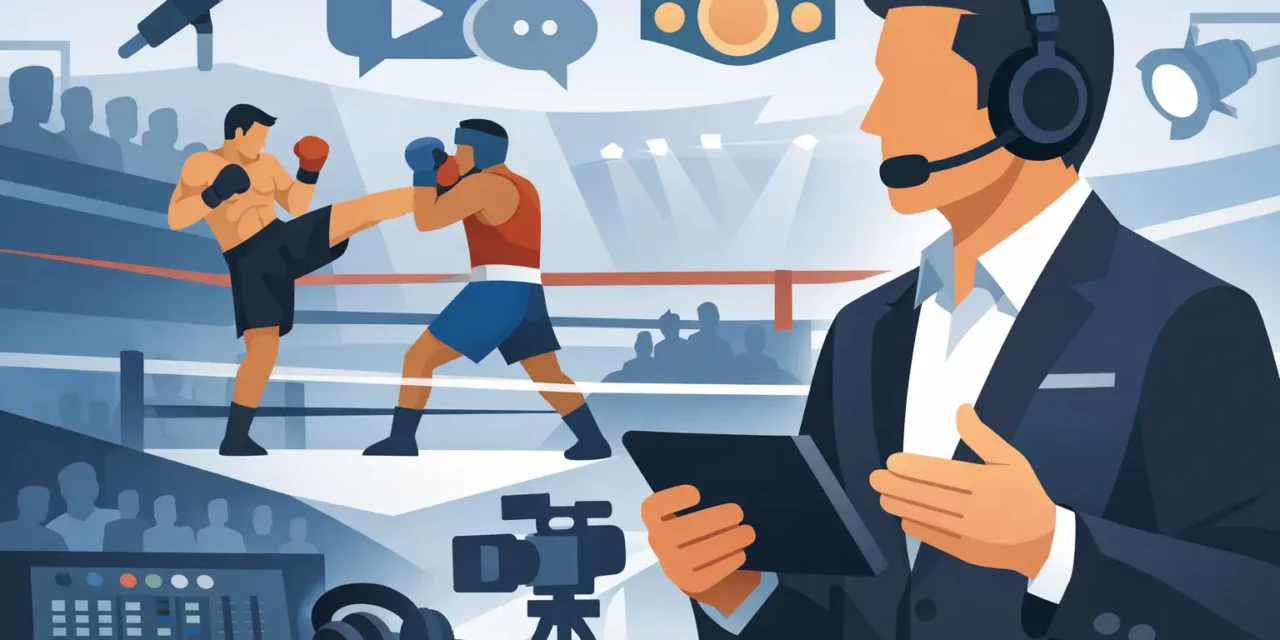
Commentary is rarely a solo act. Most broadcasts use a play-by-play lead, an analyst, and sometimes a host or former fighter adding color. Chemistry matters more than resumes.
A strong play-by-play voice keeps the broadcast moving. They set the scene, hit the major calls, and guide the conversation without making it all about themselves. The analyst adds detail and interpretation. The best analysts do not just identify techniques after they happen. They spot patterns before they pay off.
Then there is the underrated skill of not stepping on each other. Great teams leave space. They know when one voice should take over and when the moment belongs to the crowd, the fighters, or the visual. You can hear when a booth trusts each other. You can also hear when three people are fighting for the same microphone.
Wrestling commentary adds another wrinkle because it often mixes narrative and action in a more openly dramatic way. The chemistry has to support characters, storyline beats, and in-ring psychology without sounding cartoonish unless the product itself wants that tone. That balance is harder than it looks.
Bias, promotion, and the tightrope every booth walks
Here is the hard part. Commentators are not neutral robots. They work for promotions, networks, and entertainment products with clear business goals. They are expected to sell fights, elevate stars, and keep viewers engaged. That is part of the deal.
The problem starts when promotion overwhelms analysis. If the booth is constantly pushing a favored fighter, ignoring what is happening, or bending reality to fit a narrative, fans notice. In boxing especially, where scorecards and matchmaking politics already create frustration, biased commentary can poison the viewing experience fast.
Still, complete neutrality is not realistic. A booth should sound invested. The better standard is fairness. Call what is there. Give both athletes credit. Do not invent dominance where none exists. If a favorite is losing minutes, say it plainly.
That approach helps the broadcast age better too. Fans remember calls. They go back to title fights, knockouts, controversies, and heel turns. Commentary that respects the truth of the moment usually holds up. Commentary that tried too hard to spin the story usually does not.
Why some voices become iconic
Certain commentators become attached to entire eras of a sport. It is not just because they were present for big moments. It is because they sounded right for those moments.
Some have a signature intensity. Others bring calm authority. Some are brilliant at teaching. Others excel at capturing emotion without drowning in it. There is no single blueprint, which is part of what makes the role interesting. A whisper at the right time can land harder than a scream. A short line after a knockout can become unforgettable if the timing is perfect.
Iconic voices also tend to understand that commentary is a support act, not the headline. They add weight to the event, but they do not try to become the event. In a sports media world full of clips, hot takes, and personalities chasing the loudest possible moment, that discipline stands out even more.
What fans should listen for
If you want to judge a combat sports broadcast beyond whether the announcers sound exciting, listen for a few things. Are they helping you see the fight better? Are they reacting honestly? Are they explaining strategy without turning the event into a lecture? Are they making room for drama instead of forcing it?
Those questions matter whether you are watching a UFC main event, a championship boxing match, a regional Muay Thai stream, or a wrestling pay-per-view. Different products need different flavors of commentary. The booth for a gritty fight card should not sound exactly like the booth for a spectacle-heavy wrestling show. But the core standard stays the same. Make the audience feel closer to the action, not farther away from it.
That is the real test. A great commentary team can make fans smarter, more invested, and more likely to remember what they just watched. For a sport built on moments, that is not extra polish. That is part of the main event.
The next time a broadcast really clicks, pay attention to the voices as much as the punches or promos. A great call does not just describe the moment. It locks it into sports memory.